Showing posts with label literature. Show all posts

Aug 3, 2026

Let's Read the Horus Heresy: Main series tier list and thoughts

So that's it! I've read or tried to read 35 out of the 54 main series Horus Heresy novels, plus five Primarch series novels. I've divided them into three categories here: the novels I feel you must read if you're into this stuff, the ones I suggest you do read if the subject is of any interest to you, and the ones I would say don't read.

Must read:
Horus Rising
Legion
The First Heretic
Betrayer

Do read:
Galaxy In Flames
Flight of the Eisenstein
Mechanicum
A Thousand Sons
Nemesis
Fear to Tread
Shadows of Treachery
Scars
Vengeful Spirit
Path of Heaven
Tallarn
Titandeath
Alpharius: Head of the Hydra
Sanguinius: the Great Angel

Don't Read:
Battle for the Abyss
Fallen Angels
Deliverance Lost
Know No Fear
Unremembered Empire
Konrad Curze: The Night Haunter

**

After I finished Sanguinius, I took a bit of a break to collect my thoughts.

First of all, the Horus Heresy books were better than I expected. As I said in my very first post in this series, on Horus Rising, great literature this ain't. But it was definitely entertaining, more so than I had thought, even at times a bit emotional. So again, if you're into Warhammer at all, I really do recommend giving these books a shot.

Way back when I read False Gods, I talked about the way the Imperium in Warhammer used to be a 2000AD-esque parody dystopia, but these days are very clearly the good guys. Reading the whole series only reinforces this point. Nothing about this is satire, and the Emperor and the Imperium are very clearly the good guys, and Horus and the traitors are the bad guys. Sometimes there's a little bit more nuance than that, but then we go right back to very black-and-white good guys-bad guys tropes.

At worst, the series veers into leering misogyny and actual fascism; at best, there's positive representation for minorities. So in this sense, these books are very much a Games Workshop product. As I've said before, the company very clearly can't decide if they want to throw the bigots out of the fandom or dogwhistle to them.

**

From a fluff standpoint, so to speak, the Horus Heresy novels do a great job filling in a lot of background for basically everything to do with Warhammer 40,000. I now kind of have opinions and feelings about all of the legions, when before this reading project, I couldn't even have named all of them.

To adapt one of my favorite pieces of reasoning ever, the Iron Hands are the most boring and forgettable legion, which is a distinction the Ultramarines lack, making them officially the most boring of all legions.

So did we learn why the Horus Heresy happened?

Not really.

I mean okay, due to a Word Bearers plot, Horus got stabbed by a demon and went on a weird vision quest? Which somehow made fully half of all space marines suddenly hate the Emperor? No, to be honest, this is like Fallout 3 and 4 in that the main plot really doesn't make a whole lot of sense at all, but it's not really why we're here.

Now, some falls are very understandable. In First Heretic, the Emperor spectacularly humiliates Lorgar and the Word Bearers, and they go off to find gods that want to be worshipped. In Shadows of Treachery, we learned that the Night Lords were basically starting their own Curze Heresy. Then there's Angron and his World Eaters, not to mention the Emperor keeping everyone in the dark about his big secret project, which leads to Nikaea and sending the Space Wolves to attack the Thousand Sons.

So yes, it's called the Horus Heresy, but by the looks of things, the Emperor had at least four legions fully ready to rebel or in fact attacked by his loyalists without Horus doing anything. This leads to what must be the biggest theme of the whole Horus Heresy: Emps is a Really Shitty Space Dad.

**

To very briefly recap, Emps is an angry New Atheist who hates magic and the Warp, so he uses magic and possibly some kind of pacts with warp entities to make twenty* super-supersoldiers, the Primarchs. Each has a personality of their own and there's at least some notion that each of them represents some aspect of humanity or whatever. The Primarchs are then snatched up by the Chaos gods or something and scattered all over the galaxy.

Some of them end up in fairly benign environments, at least for the Warhammer 40,000 universe; they're adopted by some kind of parent (I think invariably father) figure, and grow up to be more or less decent people. Others end up in pretty terrible circumstances, like a cyberpunk dystopia where they become the Crow, a Mad Max planet where they're adopted by the Ayatollah of Rock and Rollah, or worst of all, Space Rome where they become a Spartacus who's bioengineered to be constantly angry.

Meanwhile, Emps sets out on the Great Crusade for Science and Rationalism, which slightly weirdly involves pretending that daemons and such don't exist, and he starts finding the Primarchs. Perhaps strangely for a New Atheist, Emps's method in dealing with his kids seems to be the Matthew Principle: the ones who had everything good are treated good, while the worse the world and situation they ended up in, the shittier Emps seems to treat them.

With some of the Primarchs, it's difficult to understand the whole thing at all. If you're an angry atheist who sets out to make up some guys, why do you then make one of them Theology Guy? And then when he goes and does theology, why is your solution to publicly humiliate him and his entire legion? Similarly, you hate magic, so you made up Magic Guy, and when you decide you now need to do a Super Secret Magic Project, you specifically refuse to tell Magic Guy, and then send your drunk furry enforcers to murder him. And all of that makes a lot more sense than the way Emps treats Angron. He even leaves Goth Guy on his own to sulk.

So yeah, the main overriding theme of the Horus Heresy is that Emps is a Shitty Space Dad, and if you want a single cause for the whole damn Horus Heresy, that's it. I suspect that this forms part of the appeal of the series: men can read and think about fatherhood and feelings if the dads and sons are wearing power armor in space.

**

I'm not done with this stuff yet, of course. There's the whole Siege of Terra series yet to come, and an entire sequel series to that called the Scouring is just getting started. And yes, I will be reading them. I bought the Siege of Terra books as they came out, and the first Scouring book is by Chris Wraight, whose work I've quite liked.

And I suppose that's my final word on the Horus Heresy novels: I've read 40 of them, and I'm going to read more. Part of the reason is that I've been reading about Space Marines and everything Warhammer since, I think, 1992, and I'm not going to stop now. The Warhammer 40,000 universe is such an impressive accretion of lore by now that it has a life of its own, entirely independent of what Games Workshop wants to do with it. And so far, the Horus Heresy novels have been a really good addition to that giant pile of lore.

Hell, they even gave Abaddon a personality.

*hail hydra

Jul 20, 2026

Let's Read the Horus Heresy 40: Sanguinius

Now he was running, properly sprinting down the corridors.

 - The Horus Heresy: Primarchs: Sanguinius: The Great Angel, Chris Wraight

I liked Chris Wraight's White Scars novels, and I've already started painting some traitor Blood Angels for Legions Imperialis because of Fear to Tread. So I chose Wraight's Sanguinius to be the last Horus Heresy novel I read before moving on to the Siege of Terra series.

It's funny that I just mentioned remembrancers when talking about Alpharius, and here we are starting Sanguinius with one. Disgraced remembrancer Avajis Kautenya is sent to meet Sanguinius and chronicle the deeds of his legion. He's gotten in trouble before for being too critical, and he's told to be as critical as he can be here. So he travels with the Blood Angels, watches them go to war, and just does the whole remembrancer thing as if this was Horus Rising all over again.

Other than starring the Blood Angels, Sanguinius is also like Fear to Tread in that you know what's coming, even though the protagonist doesn't, and it still works. I mean everyone at least a little bit familiar with the fluff knows what the terrible dark secret of the Blood Angels is, but it doesn't matter because the story's written so well. It's also a perfect volume to end this stage of my project on, as it starts with the Horus Rising vibes and ends on an epilogue set after the Heresy, when the Imperial cult is being set up. Very entertaining, highly recommended.

Jul 6, 2026

Let's Read the Horus Heresy 39: Alpharius

I am Alpharius.

 - The Horus Heresy: Primarchs: Alpharius: Head of the Hydra, Mike Brooks

The Alpha Legion are still one of my favorite legions, but I haven't really formed a very solid picture of Alpharius yet. Mike Brooks is here to fix that.

**

Way back in Horus Rising, the remembrancers attached to the Luna Wolves played a prominent part in the story to highlight how superhuman the space marines were. Beyond them, the Primarchs were mystical, almost otherworldly.

Several years and a pile of novels later, the space marine point of view is the default, and Primarchs are too often just boring. I complained about this when I read the Primarchs anthology, although there are worse offenders. At first, Brooks's Alpharius comes off the same way: distant, impersonal and mundane.

In the first part of the book, which owes a lot to Dan Abnett's Blood Games and Praetorian of Dorn, young Alpharius tests the defenses of the Imperial Palace. It's not bad, but it's also not great. The story picks up when Alpharius is secretly united with his legion and goes crusading. Of course, because they're the Alpha Legion, they can't just be crusading, but have to have a secret sidequest, which leads them to join the Dark Angels in the Rangdan Xenocides and fight the Slaugth.

This second part of the book is much better, and makes the whole thing worth reading. There's good stuff here, including a welcome nod to the gambit roulette nature of the Alpha Legion's cunning plans when unrest they've fomented on a planet threatens to derail their super-secret mission. Also of note is an entirely positive portrait of a same-sex couple with a child, which is a welcome change from the quasi-fascism of some Black Library authors.

I already liked Alpharius and his legion; now I like them more. Alpharius goes on the Do Read list.

Jun 29, 2026

Let's Read the Horus Heresy 38: Konrad Curze

Corpse-grey Tsagualsa turned under the light of a sickly star.

 - The Horus Heresy: Primarchs: Konrad Curze: The Night Haunter, Guy Haley

As I've said before, reading the Horus Heresy books has made me into something of a fan of the Night Lords and their incredibly goth primarch. So when I looked at the list of Primarchs novels, I had to get the Curze one.

Sadly, this was a mistake. Konrad Curze has the dubious distinction of being the only Horus Heresy novel I've read that has nothing of substance to add to the Warhammer canon whatsoever. It takes Aaron Dembski-Bowden's Night Lords trilogy, rehashes the things it said about Curze, and fills in a few bits that weren't explicitly spelled out by Dembski-Bowden, while adding nothing that would matter at all.

This book came out in 2019; the Dembski-Bowden novels were published 2010-12, and the omnibus came out in 2014. So barely five years after the omnibus, Black Library puts out this boring executive summary of what Curze was like in it. Why they did this I cannot conceive.

In general, I feel that a book shouldn't be critiqued for what it isn't. I mean this in the sense that this is the book the author chose to write, and criticism should assess that book, instead of saying they should have written something else. In this case, though, I'm breaking my rule, because of how bad this particular decision by the author is.

As I said, Curze sulking on Tsagualsa (which I keep thinking is Tsathoggua) has already been covered in the Night Lords trilogy. So far, the other Primarchs novels I've read were set before the great events of the Horus Heresy, but not this one. That's what I don't get at all. I mean yes, Curze's backstory as the Crow on planet Cyberpunk Gotham has already been told, but surely not all of it. We've barely had any glimpses into the Eighth Legion before the Heresy, or how Curze shaped them in his image. You'd think this would be significant, because by the time we properly meet Curze in Shadows of Treachery, he's already on the brink of starting his own personal Curze Heresy. So in this case, I do feel a strong sense of disappointment that the Primarchs novel on Curze chose to cover no new ground at all.

So yeah, not worth your time or money.

Jun 15, 2026

Let's Read the Horus Heresy 37: Angron

Jochura woke, if the brief, shivering yield to his exhaustion could be called sleep.

 - The Horus Heresy: Primarchs: Ghost of Nuceria, Ian St. Martin

I've read all of the main series Horus Heresy novels that I'm going to, but before I move on to the Siege of Terra books, I want to read about some of my favorite Primarchs. Now, I did already read one of these, namely Gav Thorpe's Lorgar, and it wasn't good. But what with After Desh'ea, First Heretic and Betrayer and everything, I really do like Angron and the World Eaters. So I'm reading what Ian St. Martin did with them.

**

First up, I've got Ian St. Martin's short story Ghost of Nuceria. It's a brief look at Angron doing his best Conan the Barbarian on Nuceria, just before the climactic final battle of his ragtag gladiator army with their former overlords. Probably the most important point of the story is that the Emperor is a dick, but then we kind of knew that already.

From there we go on to the Primarchs novel, Angron: Slave of Nuceria. I think a content warning is in order, because the book starts with a slightly grisly surgery scene. It's set after Angron's been reunited with his legion, and they're trying to figure out how to implant copies of Angron's rage implants, the Butcher's Nails, in everyone. Angron has ordered this, but not everyone is very happy about it, especially centurion Mago of the 18th company, who's our main point-of-view character.

About half of the book is Mago, Khârn and the rest of the World Eaters trying to force a recalcitrant planet to return to compliance, while dealing with Angron's erratic and murderous behavior, and debating the wisdom of the Nails. When the legion fails to enforce compliance within Angron's arbitrary timeframe of 31 hours - a day on Nuceria - he goes berserk and starts murdering marines, until the legion's Librarians manage to shut him down. One of the Librarians falls into a coma and starts reliving Angron's memories of his time as a gladiator on Nuceria, which makes up the other half of the story.

Once again, those of us who know the fluff know how this all ends, but it's still a well-written and effective tragedy. Angron is just a really shitty, violent dad to his legion. He humiliates them and kills them when they don't live up to his impossible expectations, and is just generally an asshole to them even though they do their best to be good little legionnaires. The aggression, sulking and unpredictable violence are more than a little familiar to anyone who's survived abuse as a child or by a partner, which does give the story an extra dimension.

Having said that, it's also very easy to understand why Angron behaves the way he does. Not only does he still have the rage implants in his head, but the Emperor snatched him away from his comrades in the middle of their climactic battle, and forced him to take charge of a legion he never wanted. Combine that with Angron's insistence on the World Eaters also being implanted with the Nails, and I'm sorry to say that this instalment of power armor space opera is actually about transgenerational trauma.

In that trauma, Emps is the original shitty dad. The more Horus Heresy I read, the more obvious it becomes that the whole mess is really the story of the Emperor's complete mismanagement of the whole Primarch project. The way he treats Angron is just awful, but it's not like the World Eaters weren't a problem before he showed up. They were already rebelling on their own, and if we recall that Curze and the Night Lords were doing pretty much the same thing, and the senseless humiliation of the Word Bearers and the Thousand Sons, Emps had a pretty good civil war brewing without Horus doing a damn thing.

I've said before that the Horus Heresy is at its best when it's understood as a tragic space opera, and there are few more tragic characters in it than Angron and his legion. If I ever collected Horus Heresy loyalists, I think they'd definitely be World Eaters. Maybe I'll build a 28mm World Eaters Librarian and hope it satisfies this urge.

Anyway, Angron: Slave of Nuceria is a perfectly decent Horus Heresy book, and I'd recommend it to anyone with any interest in the World Eaters.

Jun 1, 2026

Let's Read the Horus Heresy 36: Titandeath

The spires of the Phalanx formed a cityscape as glorious as any once boasted by Terra’s orbital plates, now all the more impressive for lack of suitable comparators.

 - The Horus Heresy: Titandeath, Guy Haley

As a diehard Adeptus Titanicus player, I'd actually been looking forward to this book. We already got some very good Titan action in Legacies of Betrayal and some glimpses of god-engines in Vengeful Spirit and Tallarn, so it's about time the Titan Legions get a novel of their own.

**

Luckily, Guy Haley doesn't disappoint, and Titandeath is a very competently written and entertaining Horus Heresy story. It follows Legio Solaria, a loyalist Titan Legion whose command crews are all-female, and their battles with the traitors of Legio Vulpa at Beta-Garmon. I liked the characters, and there's a good balance of battle and personal narratives.

Titanicus players take note, there are several named Titan classes that I think have never had models. There's a tiny Titan: "a Rapier class scout, a lighter, swifter machine than even a Warhound", and several medium ones:

The balance of their engines was of middling classes – Reavers, Nightgaunts and Carnivores – but the aggressive manner in which they deployed them made up for the relative paucity of heavier machines.

Lexicanum identifies a Nightgaunt as a sub-type of the Warlord, but it's clearly described as a Titan smaller than a Warlord in Titandeath. We want these in Titanicus and Legions!

I'm also entertained that they're fighting over Nyrcon City, which I invariably read as Nyrok City. I mean I suppose I can see Fulgrim having an Andy McCoy phase. Again, I have to be honest and say that I don't fully understand why the two sides are fighting over this particular star system, but then I rarely do, and real-world wars and battles don't always make sense either.

**

So I liked Titandeath, and shockingly, it's the last main series Horus Heresy novel I'm reading. It's kind of appropriate, too, as Horus and the gang are now ready to start their assault on the Sol system. I think I still want to read a couple of the Primarch novels, and then I'll do some kind of summing up before hitting the Siege of Terra books. It's been a journey.

May 18, 2026

Let's Read the Horus Heresy 35: Slaves to Darkness

The cloaked figure walked across the plain that had been a mountain.

 - The Horus Heresy: Slaves to Darkness, John French

This is the last print book available in the Horus Heresy main series, so this part of the project is nearing an end. I just enjoyed John French's Tallarn, and his short story was one of the best bits of the otherwise boring Burden of Loyalty. So I was a little surprised to find that getting through Slaves to Darkness was a slog.

Seeing as how this is the thirty-fifth Horus Heresy book I've read, it may just be the case that I'm getting a little tired of them. But Slaves to Darkness felt like one of those middle volumes of trilogies, where everything is either setting up the finale, or some pointless fluff around it.

Slaves to Darkness follows several characters: the Iron Warrior Volk and Son of Horus Argonis, who are with Perturabo's fleet; Horus's equerry Maloghurst; and Zardu Layak, Dark Apostle of the Word Bearers. The bunch of them are trying to marshal the traitor Primarchs for the final assault on Terra, and get Horus to recover after he's been wounded by Russ. Lorgar and Layak go looking for Fulgrim through the Webway, and the Iron Warriors go find Angron.

The trouble is that none of these characters, or the quests they're on, are particularly interesting. The action sequences feel formulaic, repetitive and pointless, and nothing meaningful happens at any point. At the end of the story, the traitor Primarchs who are going to assault Terra are there, like we knew they would be, and the entire novel leading up to it has felt like a waste of time.

My thesis at this point is that a successful Horus Heresy novel has good battle scenes, interesting characters and an amount of power armor soap opera. For the battle scenes to feel meaningful, we have to care about the characters and what they're doing, and the power armor soap opera is there to make the action mean something. Slaves to Darkness is too much power armor soap opera, with very few interesting characters and battle scenes that aren't really tied in to the soap opera at all.

I don't know, maybe I'd feel different if I read this with fresher eyes, so to speak, but this was a very disappointing experience. Avoid.

May 4, 2026

Let's Read the Horus Heresy 34: Burden of Loyalty

Gritty ochre dust clings to the dead warrior’s open eyes.

 - Into Exile, Aaron Dembski-Bowden, in The Horus Heresy: The Burden of Loyalty

It's an anthology! The last one, as it happens; the Horus Heresy series is drawing to a close. It starts with a Gav Thorpe story starring Space Woofs, and I can't think of many things I'd like to read less, so I skip it. Aaron Dembski-Bowden's Into Exile was all right, but I have to say that I was disappointed by how boring Rob Sanders's Cybernetica was. Yes, it's got piles of fluff on Mars, but you can't help thinking that McNeill did all of this so much better in Mechanicum.

Luckily David Annandale's Binary Succession in this volume is much better, and the John French psi-titan story is so good that it demonstrated once again that he's the Black Library author who's made me miss the most subway stops. This is followed by Chris Wraight, and no matter how well he did with the White Scars, the Space Woofs are just as boring when he writes them. Finally, it's Dan Abnett with a decent enough short story starring his Perpetuals.

I have to say that this was a very poor quality anthology. I think the problem is the same one that's been present through the entire series: the loyalists are just really boring.

Apr 20, 2026

Let's Read the Horus Heresy 33: Tallarn

The last Titan left on Tallarn bore the world’s new master across the dust plains.

 - The Horus Heresy: Tallarn, John French

I don't think it's a coincidence that some of my favorite Horus Heresy novels are the ones with barely a Space Marine in sight. Nemesis is the most prominent example, and I'd say I enjoyed Tallarn just as much, if not more. Or I mean technically this is an anthology, I think, but all the stories are by the same guy.

Later on in the book, some marines do show up, but at least they're interacting with non-marines a lot, and the Alpha Legion is also there, which is always fun. Tallarn is still mostly the story of people in tanks, on a planet turned to a toxic hell by virus bombardment, and that's what makes it so good.

The star of the show is definitely Tallarn itself. The sheer claustrophobia of driving tanks around a totally poisoned planet, where one tear in your protective suit means immediate, gruesome death, is powerfully conveyed and sticks with you. At first it's a mystery why anyone could possibly be bothered to fight over a place like this, but that gets turned into a plot point, which is satisfying.

If I'm honest, the plot itself isn't that great, but I was certainly entertained, and Tallarn goes on my Do Read list.

Feb 2, 2026

Let's Read the Horus Heresy 28: War Without End

Slender tendrils of fragrant smoke drifted from fang-mouthed oil burners, filling the bed-chamber with a delicious mix of cinnamon and honeysuckle.

 - The Devine Adoratrice, Graham McNeill, in The Horus Heresy: War Without End

It's another anthology!

**

Graham McNeill kicks things off with The Devine Adoratrice, a prequel to Vengeful Spirit, about Knight House Devine. I didn't like it any more than I did the Devine plotline in that novel.

There are two Dembski-Bowden stories here, Howl of the Hearthworld and Lord of the Red Sands, and the latter is why I got this collection. Howl of the Hearthworld, though, is about Space Wolves, and while it's well written, it still confirms what every other Space Wolf portrayal I've read also tells me: that they're deeply unpleasant, arrogant bullies. Most of the story is about a squad of Space Wolves being assholes to someone who did nothing to deserve it. By contrast, Lord of the Red Sands stokes my growing love for Angron and the World Eaters.

Other standout stories include James Swallow's Gunsight, a sequel to the excellent Nemesis, and Guy Haley's Twisted, also set on Horus's flagship. The rest of them are mostly all right, I guess?

To be honest, I don't really know how I feel about these anthologies. The good stories are good and I enjoy them. Even the mediocre ones are fine to read while commuting or such. But I don't really remember anything about them. Would I buy these if I wasn't doing this reading project? Probably not.

Jan 19, 2026

Let's Read the Horus Heresy 27: Vengeful Spirit

The dead of Dwell were screaming.

 - The Horus Heresy: Vengeful Spirit, Graham McNeill

After the White Scars, I'm taking a gamble on Graham McNeill and Horus. This one's set on Molech and I've got the Adeptus Titanicus expansion named after it, so I expect Knights. We haven't actually seen that much of Horus and his legion, so I kinda miss them.

**

The plot of Vengeful Spirit is basically that Horus thinks there's something very important to the Emperor on Molech, so he's scheming with Fulgrim and Morty to get it. Meanwhile, Malcador and Leman Russ are scheming to kill Horus, so they order ex-Luna Wolf Gavriel Loken to gather a special team to assault Horus's flagship.

If the latter plot sounds pretty much exactly like Nemesis, that's because it is, only Nemesis was better. Loken's team is made up of loyalist marines who are all completely forgettable, except that the contrarian Iron Warrior is called Tubal Cayne. The whole Loken plot is frankly quite boring and meaningless, and the book would have been better without it.

The part where we follow Horus and his new Mournival is much more interesting. It feels a lot like Horus Rising, but with the tragic absence of all the best Luna Wolves. In fact, a lot of the whole thing is practically a direct sequel to Flight of the Eisenstein, which isn't a bad thing at all. McNeill's Horus is light-years better than in False Gods.

The aerial assassination attempt on Horus made me want to get some Fire Raptors for Legions. But while the idea of various loyalist marines randomly attacking Horus like Cato assaulting Inspector Clouseau is very funny, wouldn't you think that if Horus is going to spend quite a bit of time ensconced at a strategically important facility, it would occur to someone to have at least some kind of anti-air defenses, or even surveillance radar, around? Especially since soon after, we're given detailed descriptions of the air defences on Molech.

Luckily most of the middle part of the book is dedicated to the Sons of Horus and the fighting on Molech. For some reason, the initial battle Horus leads is a practically suicidal frontal assault on a strongly fortified loyalist position, and most of the other fighting doesn't make a whole lot of sense either. I will say that the boarding shields definitely make me want to build some breacher squads. It says a lot about GW's priorities that we got a new edition of Horus Heresy before we got all of the troop choices in plastic.

The fighting is good, though, and Horus's schemes make for good epic space opera. It feels like ages since the plot's properly advanced, and now it has. There's good stuff with Knights and Titans and so on, even if the goings-on in Knight House Devine are quite sordid. That and the sheer length of the book are more than a bit Fulgrim, but this is much, much better. I think Vengeful Spirit could have done without about half of its sideplots and characters, but as a Horus Heresy novel, it's actually quite good.

**

So here we are: Horus is on his way to Terra and I'm recommending Graham McNeill and avoiding Dan Abnett. It's a strange old galaxy.

Dec 1, 2025

Let's Read the Horus Heresy 23: Betrayer

Skane was the one to find the body.

 - The Horus Heresy: Betrayer, Aaron Dembski-Bowden

"If the Bureau of Ordnance can't provide us with torpedoes that will hit and explode ... then for God's sake, get the Bureau of Ships to design a boat hook with which we can rip the plates off a target's side."

 - Rear Admiral Charles A. Lockwood USN, Commander, Submarines, Pacific Fleet, at a 1943 meeting of the Submarine Officers' Conference, quoted in Clay Blair Jr., Silent Victory: The U.S. Submarine War Against Japan, J.B. Lippincott Company, Philadelphia and New York, 1975.

"Status on the ursus claws?"

 - Flag-Captain Lotara Sarrin

We're back with the Word Bearers and the World Eaters, conducted by Aaron Dembski-Bowden, who I think has to be the best Horus Heresy author by quite a margin. Betrayer is one of the books Games Workshop has kept in print, and it's a nice change reading a physical book again. I loved Dembski-Bowden's First Heretic, and have been looking forward to this.

**

Once again, Dembski-Bowden fully lives up to expectations. As grand and intoxicating as First Heretic was, this picks up where it left off, with the excellent addition of Angron and his equerry Khârn. Lorgar has some great interactions with Magnus and Angron, and Horus even phones in psychically, but the stars of the show are indubitably Khârn and Argel Tal, two of the most charismatic characters of the Horus Heresy. It's like being with the Mournival and friends in Horus Rising again.

If you remember the Super Star Destroyer from Battle for the Abyss, it turns out Lorgar has two more of them. The combined Word Bearers-World Eaters fleet tears through Ultramar, fighting smurfs all the way. Probably my least favorite feature of ADB's prose is when he pontificates on war, especially as I can't really not fact-check it as I read it. But the battle on Armatura is a delight of mil-sf. The way both the captain of the Conqueror and the Legio Audax titans have to work around the World Eaters' senseless rage is excellent, and I can barely describe my astonishment when the World Eaters get resupplied. Actual logistics!

The prize for best supporting character, by the way, definitely goes to Captain Lotara Sarrin of the Conqueror. I love her, and I hope she gets to bombard a planet soon. After Armatura, the gang heads to Nuceria, where they have a climactic battle for the ages. It's got everything from Warhound Titans fighting an Imperator to Erbs being horrible.

I could write so much, but I don't really want to. I strongly recommend experiencing Betrayer yourself. I feel that if any Horus Heresy books come close to transcending Warhammer fiction, this is one. For my money, Horus Rising, First Heretic and Betrayer are by far the best books in the series, and I'd say Betrayer is the best of the lot. Great characters, great war stories, great drama and tragedy. It's simply epic.

Nov 3, 2025

Let's Read the Horus Heresy 21: Shadows of Treachery

My scream woke me from the dream.

 - The Crimson Fist, John French; in The Horus Heresy: Shadows of Treachery

Next up it's yet another anthology. This one's good, though.

**

John French gets us started with a whole novella about the Imperial Fists fighting the Iron Warriors. It's quite decently written, and I like an epic space battle, but the Fists are just kinda boring. Once again, Rogal Dorn is a complete buffoon, and he's clearly trained his legion to obey his orders stupidly literally to the point of suicide, but the more I read about him, the more sense that makes.

Because French writes pretty well, I have to say that the Iron Warriors were a bit of a disappointment here as they were just a pile of generic villain tropes with some hazard stripes painted on. My only impression of Perturabo at this point is that he's an uninteresting video game end boss.

Graham McNeill follows up with the Dark King, a short story on how the Primarch of the Night Lords, Conrad Kurze, starts his rebellion against the Imperium. It features Rogal Dorn being a buffoon, and I am a fan of Kurze kicking his ass.

Dan Abnett is next, and we're back on Terra in The Lightning Tower, with... Rogal Dorn. I didn't know this was an Imperial Fists anthology. This is kind of a follow-up story to the previous one, I guess, but it really doesn't add much and isn't very interesting. I can think of so many things I'd rather read than Dorn's internal monologue.

Graham McNeill then surprises us by heading back to Mars, without a suit of yellow power armor in sight. It's a good story, though: a prequel to Mechanicum, which I liked. There's a Gav Thorpe story, and I tried reading it for a bit, and then moved on. At least I think Rogal Dorn wasn't in it.

Next up is a third McNeill story, Death of a Silversmith. I'm slightly surprised that of all the Horus Heresy authors, he's quite good at these little vignettes far from the main action. Last but certainly not least is Aaron Dembski-Bowden's novella, the Prince of Crows, starring First Captain Sevatar of the Night Lords. This is Dembski-Bowden on top form: excellent entertainment that had me stay up too late because I didn't want to stop reading.

**

So here we have a rare thing: a really good Horus Heresy short story anthology. I think Prince of Crows alone is worth the price of the whole thing, and Dark King's pretty good too, which I think makes this an almost compulsory volume for Night Lords fans.

Which I'm afraid I'm slightly becoming. I really liked Sevatar and the whole gang, and I think that if these books were my introduction to the Horus Heresy, I'd be seriously considering a Night Lords army. After all, the Punisher was my favorite Marvel character. I'm going to try to limit myself to maybe building a character model.

Jan 2, 2023

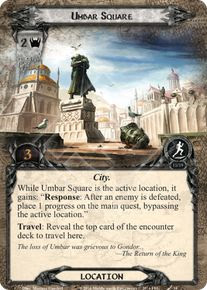
Let's Read Tolkien 94: The Umbarian Gambit 36-

Umbar, the Fish Market
June 2, 3019
The shrimp were excellent.


Nah, you know what, he's lost me. I read several chapters of a thoroughly modern, really hackneyed and badly written spy novel, starring Baron Tangorn as James Bond in exotic Umbar, and was bored to death. I started skimming forward, and it just kept going and going. There's no longer any point in talking about anachronisms or themes: the story has nothing to do with Middle-earth or Tolkien any more, and I'm just not interested.

Sadly, this means I'll never find out what dazzlingly clever plot twists the dude came up with for the end of his story. I can live with that.

**

So, that was the Last Ringbearer, as far as I'm concerned. It's much more interesting as a concept than an actual text. I liked some of Yeskov's ideas, but the execution is so bad that I honestly can't recommend it to anyone.

When I started reading the Last Ringbearer, coincidentally a year ago, one of the great points Yeskov made in an interview I read was that a lot of Tolkien's Middle-earth doesn't really make sense. For all his talk of sub-creation, Tolkien wasn't really interested in creating a consistent, or even coherent, fictional world: he was interested in creating a backdrop for his stories and his languages. One of the reasons I was interested in the Last Ringbearer was that I thought Yeskov would try to make it all make sense. But he does the opposite. One of the central tenets of his reimagining of the War of the Ring fails spectacularly, and in general, his alternative versions of Mordor, Umbar and so on are a completely incoherent mess of orientalism and anachronism. Reading Yeskov makes you admire Tolkien's creative vision and consistency all over again, which, given the tone of Yeskov's work, cannot have been the effect he intended.

So anyway that was that. I can't say I think it's a coincidence that I've heard so many people refer to the fact that the Last Ringbearer exists, and so few references to its actual content. As I'm actually quite busy nowadays, my Tolkien-reading series will continue at some later time, maybe. For now, happy new year.

Dec 5, 2022

Let's Read Tolkien 93: The King and the Steward 31-35

Gondor, Minas Tirith
May 17, 3019
“Her Royal Majesty the Queen of Gondor and Arnor!”

We now go to Minas Tirith, where we get to know Aragorn and Arwen a little bit.


**

Aragorn, we learn, is unhappy: despite winning the throne of Gondor, Arwen refuses to actually marry him. They're only pretending to be king and queen, when in reality she's his elven "advisor". It turns out they're also running rival espionage operations, competing for the technical knowledge of Mordor and Isengard by running rival Operation Paperclips. After some repartee with Arwen, Aragorn receives the White Company, Faramir's former guards.

The scene then shifts to a quarry in the White Mountains where Kumai, a Troll engineer, is held captive along with a black Haradrim mûmak, sorry, múmak driver, Mbanga. We're given an infodump about how the Harad Empire fought against slavers from Khand. It's puerile, at best orientalist and cliched, and boring. The significance is that Mbanga gets into a fight with the guards and is killed. There's some very cringey orientalism about how he now gets to go to the heavenly lion hunt or something, and also a frankly uninteresting flashback to Kumai's war experiences. The guards also beat Kumai badly, but this provides an opportunity for him to be smuggled out of the quarry by the anti-Gondor resistance.

However, unbeknownst to Kumai but beknownst to us, it isn't actually the anti-Gondor resistance at all, but a fake resistance movement run by Aragorn's agents. Apparently they all have animal codenames, because Cheetah debriefs Mongoose and sends him to Umbar to capture Tangorn. And with that, chapter 35 and part II come to an end.

**

So, that was part II. I have to say, as a fantasy or adventure novel, this is really not very good. If it was an original IP, so to speak, I would not be reading it any more. So this is kind of a slightly weird exercise where I'm actually interested in Yeskov's alternative Middle-earth, but I'm finding it a chore to trudge through his prose. These chapters highlight the problem: I love the idea of elven and dúnedain spies racing to secure the legacy of Mordor; I dislike the silly stuff about Harad and Khand and so on; and I'm bored by everything else. The combination of the terrible narrative voice and the total incoherence of the fictional world is just really offputting. Also I actually miss Haladdin.

Looking at the table of contents, there's four parts and 69 chapters (nice), so I'm pretty much halfway through. I'm going to keep at this, mostly to see if he comes up with any other cool stuff. But I think I'll be sticking with this sparser narration, largely because I can't really be bothered to engage with the story more closely.

**

Next year: part III

Nov 7, 2022

Let's Read Tolkien 92: The King and the Steward 25-30

Ithilien, Blackbird Hamlet 
May 14, 3019 
“So you just announced it to the entire Emyn Arnen: ‘merry men of the Blackbird Hamlet?’”

Together with the men of Blackbird Hamlet, our heroes are planning to rescue Faramir.


**

Faramir and Éowyn are being held in Emyn Arnen, and they're plotting to escape with the help of Beregond. The Blackbird Hamlet gang are plotting to free them, and now Tangorn and Tzerlag participate. Various spying shenanigans ensue, leading up to Tzerlag sneaking into Emyn Arnen to free Faramir. The attempt fails, and it looks like they're going to be killed, but Aragorn's spies let them escape.

Two constants remain. The names are all over the place: the man Beregond clandestinely meets is called Runcorn, and they're caught by the Gondorian "counterspy" called, ludicrously, Cheetah. Anachronisms abound: the espionage and counter-espionage are fully 20th-century, as is the martial art Tzerlag is trained in. Someone actually shouts "Freeze! Drop your weapons!". And so on. Yeskov's Middle-earth is a total mess. The only redeeming feature here is that it's Blackbird Hamlet.

What's worse is how Yeskov ruins his story by turning everything into a sterile intellectual exercise. Whether it's intelligence and counterintelligence, or a fight in a hallway, one side always know exactly what the others expect them to do, and then do something different. Everything works out just so, and this is explained to us by nearly omniscient characters as if everything was always completely obvious. Faramir and Éowyn are the only ones who are allowed to escape this, and therefore the only characters in these chapters who even remotely resemble people. With everyone else, there's no human element present at all.

Again, the overriding impression is that Yeskov very badly wants us to think he's incredibly clever. This could have been a decent spy/heist story, but it's just soulless. By the way, our Nazgúl main character Haladdin is barely even mentioned in these chapters.

Where this all ends up, then, is that Faramir and Éowyn are free, Haladdin and Tzerlag have access to Faramir's palantír, and Tangorn sets off for Umbar.

**

In other news, I'm happy to say that I finally got to give my lecture on Tolkien at the Helsinki Adult Education Center, as part of our lecture course on the history of heresy. I talked about evil, Manicheanism and Pelagianism, and did my exegesis of Frodo's experience on Amon Hen. I thought it went all right, and I'm very pleased I got to put together some of the stuff I've been writing about here into a proper lecture.

**

Next time: Aragorn.

Oct 3, 2022

Let's Read Tolkien 91: The King and the Steward 23-24

Mountains of Shadow, Hotont pass
May 12, 3019
“There’s your Ithilien.”

We're back with Haladdin and the gang, who are making their way across the mountains into Ithilien, with the help of some trollish resistance fighters. We visit the trolls of the Shara-teg valley in a sort of flashback, and then our heroes find some of the Baron's old soldiers.


To use Tolkien's terms, we're now in Yeskov's own particular sub-creation, and a couple of things do stand out.

First, the language. We experience Hotont Pass, Shara-Teg valley and meet Ivar the Drummer. Oh, and they drink vodka. There is no logic to these names, or to the kind of culture and language Yeskov is trying to portray. Everything is eclectic and poorly thought out, and keeps getting worse as the story goes on.

This is underlined by my least favorite feature of the story, which is the relentless anachronism. We again have guerrilla fighters in a preindustrial society behaving like modern professional soldiers. People point bows at others like they're guns and hold modern military ranks. While they're staying with the trolls, Haladdin meets, of all things, a graphologist. The graphologist produces a psychological profile of the elven officer they killed in Mordor, and Haladdin uses this to come up with a key idea for his plan, to which we are not privy.

A lot of stupid things get said about fantasy and "historical accuracy", especially by people who are fine with dragons and zombies, but insist that if there isn't violent misogyny it isn't "historically accurate". As a historian, I consider this very silly. Fantasy isn't history: there's no reason to demand historical accuracy of it in the first place, and when the demand is made, it's almost invariably made in a way that's so selective that it's obvious it's being used as an excuse.

What I think fantasy or indeed any speculative fiction should be is coherent. If you want to portray a pre-industrial society with Middle Eastern influences, then do that. This seems to be what Yeskov set out to do, but it's constantly undermined by his references being all over the place, his unbearably smug narrative voice, and above all by the fact that all of his characters are clearly 20th-century people who for some reason happen to live in a fantasy world.

Tolkien used anachronisms deliberately, to maintain a distance between the narrator and the story, and sometimes for reasons that are entirely beyond me. I still have no ides why hobbits have potatoes. Yeskov uses them constantly to batter the reader into submission.

I'm still of two minds as to whether or not I actually want to see this whole thing through. Every now and then, I read a chapter and I feel like okay, I want to see where he's going with this. Far too often, though, the "look how clever I am" schtick makes me despair. We'll see what happens.

**

Next time: merry men.

Sep 5, 2022

Let's Read Tolkien 90: The King and the Steward 20-22

Ithilien, Emyn Arnen 
May 3, 3019 
“What time is it?” Éowyn asked sleepily.

In this, the second part of The Last Ringbearer, the point-of-view character is Faramir. We've heard about him before: he was handily indisposed when Gandalf took over in Minas Tirith, and Tangorn mentions his forced retirement to Ithilien. That's where we find him now.


**

There's a little introduction where Faramir and Éowyn are being cute, and then we take a flashback to the battle of the Pelennor. As in the Lord of the Rings, he's shot with a poisoned arrow, but here it's very strongly implied that the shot came from his own side. He's then taken to a hospital in Minas Tirith, paralyzed by the poison, and Aragorn eventually comes to see him and monologues at him like a B-movie villain.

The upshot is that Faramir is sent into exile to Ithilien. Éowyn is in love with Aragorn, but he has her care for Faramir and sends her off to Ithilien with him. There Faramir supposedly rules as the Prince of Ithilien, but is actually held hostage in the fort of Emyn Arnen by Beregond and the soldiers of the White Company.

Eventually it dawns on Éowyn that Aragorn has discarded her, and she hears about his marriage to Arwen. So then when an envoy arrives to summon her to Minas Tirith, she refuses to go. Faramir is already in love with her, and soon she reciprocates.

However, Faramir suspects that Aragorn won't leave them in peace, and starts plotting. It turns out he has the palantír that was in Minas Tirith. In this story, anyone involved in the murder of Denethor who looks into it only sees his burning hands. Thinking the stone useless, Aragorn and his co-conspirators let Faramir take it with him. Faramir now uses it to test Beregond's loyalty, and once he determines Beregond wasn't involved in the murder, they start intriguing.

**

As ever with Yeskov, the prose is clunky at best, but his strength is in writing an adventure story, and once we get past Aragorn's monologue, that's what we get. On the other hand, Yeskov is at his worst when he's trying to write something clever, and Aragorn's monologue is just bad. His portrayals of Faramir and Éowyn are humane, though, and we're definitely rooting for them. Hopefully the story keeps rolling along with a minimum of metaphysics and clever politicking.

**

Next time: trolls.

Aug 1, 2022

Let's Read Tolkien 89: Vae Victis 17-19

Silence fell.

Haladdin has just received his mission to save Middle-earth, and he's still talking to the Nazgúl Sharya-Rana about it. I swear this is a four-chapter infodump. In these chapters, the Nazgúl is giving Haladdin information about how to destroy the Mirror, without telling him how to destroy the Mirror. Because of what Sharya-Rana obscurely calls "the rules of the game", he can't tell Haladdin what to do, but he has to lead him on until he supoosedly figures it out on his own. It's never explained why this has to be done, and frankly, it's tiresome.

It doesn't help that both the things they talk about and the language they use are relentlessly anachronistic. For instance, Haladdin at one point nonchalantly sums up the palantír and magic mirror as a "two-key system", as if it was obvious that a medic in the Mordorian army would know what it was. At first, I quite liked the idea of an alternative take on the Nazgûl, but again the strongest impression these chapters convey is that the author was very impressed with how clever he was being. For my part, I honestly cannot be bothered to sum it all up. The end result is that the "Nazgúl" tells Haladdin that the Mirror is in Lórien, there is a palantír in Dol Guldur, and Haladdin has to use the palantír and the volcano of Orodruin to destroy the Mirror. He could literally just have said that. There's no point in spinning it out into a huge, annoying didactic dialogue. Sharya-Rana then gives Haladdin his ring, and dies. Haladdin is now a Nazgúl, I guess, except with no magical abilities whatsoever.

Haladdin's companions now wake up, and he tells them what happened. Chapter 19 consists entirely of their discussion, and Haladdin trying to come up with a plan. There are several problems: getting into Lórien seems impossible, and the Mirror is too heavy to move. Eventually, Haladdin hits on an idea: based on what Sharya-Rana told him, they can use a palantír to transmit the fire of Orodruin to the Mirror. Again, the Nazgúl practically told him to do this, but for some reason we're never given, supposedly couldn't tell him this. It's stupid.

Anyway, now they have a plan, sort of, and they head for Ithilien, where Tangorn intends to introduce them to Faramir.

**

Next time: part 2!

Jul 4, 2022

Let's Read Tolkien 88: Vae Victis 15-16

The Nazgúl!

No, we still can't have more than one kind of diacritic. The person Haladdin finds sitting by the fire is, indeed, a Nazgûl. He introduces himself as Sharya-Rana, a famous mathematician and theologian from ages past, who is now a ring-wraith. Of course, on this Middle-earth, that means something entirely different: these "Nazgúl" are protectors of the scientific civilization of Mordor. This Nazgûl interrogates Haladdin about some of the choices he's made, during the war and before it, and tells him that he's the perfect person for their plans because he's so completely irrational that the enemy won't be able to predict his actions.

That's chapter 15; chapter 16 is a huge infodump on how magic works in Middle-earth, and frankly, it's boring. The gist of it is that there are two parallel universes, a magical one and a mundane one. The two worlds are connected, and anyone from Middle-earth who's been to the magic world is a wizard. The Nazgúl are one bunch of wizards and the White Council another. The Mirror (as in of Galadriel) connects the two worlds. The elves are trying to turn Middle-earth into another magical world, where nothing ever changes. This is why they had to destroy the scientific civilization of Mordor. The White wizards have given the Mirror to the elves, so now Haladdin has to save Middle-earth by destroying the Mirror.

**

So the central idea here is that Haladdin is the right guy for the job because he's so impossibly irrational. I'm now going to complain, because this annoys me. The idea that someone being so irrational and unpredictable is a strength is an ancient trope, and it's almost always a really stupid one.

It's used succesfully several times in the original Star Trek - mostly on machines, where the specific premise is that they can't handle human irrationality, or on half-Vulcan chess players who one suspects are more invested in demonstrating their superior logic than actually being good at the game. The most satisfying chess experience of my life was against an engineering student who insisted that their superior grasp of mathematics and logic meant they must be much better than me at chess. They walked into a variant of the fool's mate because they didn't actually know how to play chess.

When it comes to more complicated human endeavours, the idea that sheer unpredictability is an asset becomes a whole lot more difficult. As a strategy, it isn't great. So-called madman theory has been tried and the results aren't exactly overwhelming. Even in poker, the idea that it's good to be unpredictable has certain limits. Yes, you want to play poker in a way where your opponents find you difficult to read. If you play 100% consistently, you'll never win any money because no-one will ever bet against you. But if you constantly play irrationally, you'll inevitably lose money in the long run because you're playing against the odds. The rational approach to something like poker or indeed strategy is to use your resources in the way that gets you the best return on your investment. It's worth investing some resources in confusing your opponent occasionally by doing some irrational things, but too much will bankrupt the whole operation. If sheer unpredictability was a virtue, armies would have officers rolling dice and reading tea leaves as standard procedure. Most of the time, going about a task irrationally and unpredictably is just going to mean doing it badly.

As a military strategy, it reminds one of the adage apparently contained in the Mordor field manual: never do what the enemy expects. This is trite at the best of times, and at worst turns into an endless spiral of second-guessing: what if the enemy expects you to do what they don't expect? This was put forward as a strategy by British self-appointed great military thinker B.H. Liddell Hart as "the strategy of indirect approach", which has been criticized on exactly the same grounds: if you always take the indirect way, it then becomes the direct way. An example of Liddell Hart's indirect approach is the allied Mediterranean offensive in the Second World War, which was a gigantic waste of time, resources and lives to strike at the "soft underbelly" of the Axis, and ended up achieving pretty much nothing in terms of the actual war against Germany. And this, in the end, is the main point: it's never enough to be unpredictable. You also have to be able to do something effective that your enemy can't easily counter.

The other problem with this scenario is that none of the "totally irrational" things Haladdin does are really particularly irrational at all. He makes wartime decisions that are less than totally cold-blooded; he joins the military during a war due to peer pressure and to impress his fiance. If this is hopelessly irrational, I don't know whose behavior the "Nazgúl" model of rationality can expect to predict.

If you want a fictional example of doing something that the enemy would think is so insane it never even occurs to them someone would try it, and that they therefore don't take effective action to stop, what comes to mind is sending a hobbit to throw the enemy's ring of power into a volcano. So I don't know, this feels the same as the author's very clever socio-economic reimagining of the War of the Ring that actually makes no sense whatsoever: it's like he's trying so hard to be very clever and subvert Tolkien's story, and he ends up with basically the same thing but worse.

However! The plot is advancing, and for that we are grateful.

**

Next time: more wraith-exposition.